
the secret page
How to make your life more beautiful forever

Resting on a small peak on our trek through the Avawatz Mountains: A delicious dip into nature and out of the modern technological world!
Denson’s Deep and Dark Inner Consciousness: Hm. A condrum before me. A most quizzical quandary. I can either refuse to admit that I’ve been making a huge mistake since 2015 by having a smart phone constantly with me, effectively making my life shallower and decreasing who I am over the last 10 years, or admit to making that mistake, and embrace again for the first time in years the lasting deep joys of being constantly in the present moment, of reinvigorated creativity, deepened relationships, and all around zeal and zest for life. Wow. Easy call. I’ve been wrong, and I’m free! Hooray!
How about that? It’s not a mistake that’s irreparable by any means! And in this particular mistake, of having a smartphone for a long time, the odds were stacked against you. Your whole society, in fact, is against you. Not in an oppressive, mean way: Just in the way that the practice is simply integrated everywhere. It is no understatement to say that it’s a herculean challenge to oppose a society-wide held belief; it’s actually a herculean task to even be able to recognize a society-wide held belief being there at all, much less to be able to think that it’s bad. All throughout human history, entire cultures have brutally enslaved people, and in almost all cases, many of that culture’s inhabitants can’t even see that anything is wrong. That is the power of an entire society holding a belief. Most people you know think having a smart phone is fine. It’s currently socially acceptable to pull out a phone while a friend is speaking. It’s currently socially acceptable to give children a device when they’re acting up in a restaurant. But it’s not right. That’s my belief, and I’m hear to sing it to you! I sing the body electric, I say! And yeah, maybe one shall be socially deemed priggish when one tells friends “it makes me sad when you get on your phoneswhen you’re with me.” But I want people to be happy. I want them to live beautiful lives. I want them to experience great art, and hopefully even create it. And I know that ubiquitous, compulsive smart phone usage is standing in the way. And so I sing.
It’s a funny thing how every single new technological generation has its own unique problem. This problem of smart phones happens to be our particular burden. But there’s a pretty cool silver lining: every single new technological generation also has the resources to produce the best life a human has yet been able to live. The problem is that human ethics have to catch up with human technology, not the other way around. An example. The invention of the wheel was a gamechanger. A huge dub for humanity. One of our absolute best. But do you know for whom the wheel was not such a cool thing? The guys who got tortured on the breaking wheel. Not such a dub for them. It took society longer to figure out that torturing people on a wheel was wrong than it takes the time to build an actual wheel. We have the same fundamental problem in, fortunately, more subtle circumstances. But that very subtlety makes it harder to figure out how to use our technology. So how can you (the beauty-seeking artist, remember?) reading this in our wild, crazy, amazing, confounding technological generation, use technology in ways that gives you all the advantages while skirting all the downsides?
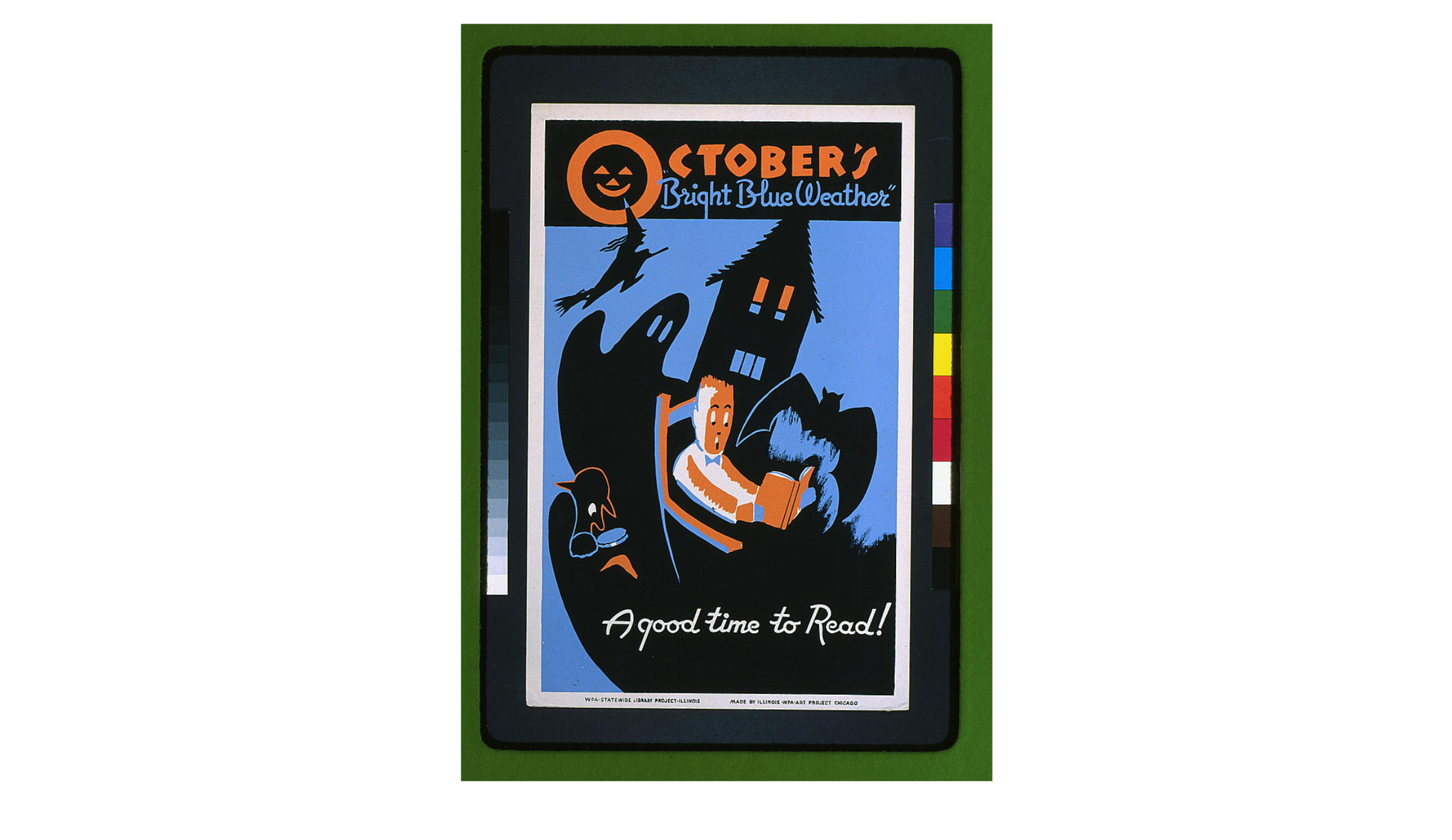
The joyous antidote to modern life… reading!
A delectable idea for your consumption: you know how when you have an extraordinary experience, or read an incredible book, or have a great conversations with a friend, it feels like—and it’s the strangest thing—there’s more of you than there was before? Our friend Walt Whitman might say that “the multitudes you contain have been increased.” Zum Beispiel: In my senior year of college, I had the insane and enchanting experience of exploring the trailless, magical, Mojave Desert Avawatz Mountains with my friends over three days. We discovered abandoned open mineshafts, found rusted horseshoes over a hundred years old, and literally slept in the clouds—a very cold and wet experience, by the by! Now, I don’t feel that, as a result of having that adventure, I am even remotely a better person; but it does feel like I’m a more Densonish person. It added more to me, if you know what I mean. I think a lot of people feel this way about their study abroad experience, but it’s hard putting this specific thing into words: it’s like changing the inner size of your self. Like I mentioned, I also think having an hours-long conversation into the wee hours with a friend, or reading a fantastic book over the course of a turning-period in your life, or falling in love with a person very different from yourself, or any number of these enriching experiences all secretly do the same thing: they increase who you are. A very particular thing, and very beautiful. And ah, well, you can probably see where I’m going with this.
Smart phones decrease who you are. Plain and simple. You probably already vaguely feel this happening to you when you use a smart phone for long periods of time, and, just perhaps, find yourself incapable of being in a calm, unstimulating present moment without a creeping background anxiety slowly seep into your brain. This is a horrific thing, and peculiar, too, because a smartphone is both the disease and the palliative. They make you vaguely anxious when you’re not doing anything, which encourages you to pull out your phone to suppress that anxiety. This creates that horrifying cyclic dependency: you’re uncomfortable when you’re alone with yourself, thus more likely to pull out your phone and distract yourself from the present moment, and so on and so on ad infinitum. And this process is so well-manufactured and sinister that most of us are not even conscious of it.
Have you ever noticed that you feel vaguely rushed to move onto the next thing, even when there’s no time limit or deadline? Do you feel a strage, irrepressable pressure to document beautiful life moments out of a fear that an experience un-photographed is an experience un-had? Do you tend to feel impatience at things that are not literally instantaneous? If any of these apply to you, it is this musician’s opinion something dark is happening, something with effects that run deeper than you can probably feel at this moment. BIG POINT NUMBER ONE: When a person is addicted to algorithm generated content, and/or consistently disrupts their inner life with music, podcasts, and other unconscious/compulsive phone-checking, they effectively banish all the moments of mental solitude necessary to sustain a healthy, stable headspace, and their ability to produce art, their capacity of forming human connection, and above all, their ability to live deliberately, becomes corroded. And this is happening all around us, to everyone we know, with evil intent behind it all: for profit.

You could fulfill all your alchemy aspirations if you simply ditch the smart phone! —Illustration by N.C. Wyeth
But how bad is it really, being addicted to a smart-phone? Well, you may have noticed how I keep using the word “vaguely” when I’m describing the effects of smartphones, and there’s a reason for it. If smartphones gave you the sharp, negative jolts that I’m trying to give you, you’d probably stop using them. And for the billion-dollar tech companies that make the phones, and the multi-million dollar social media companies that populate the phone with addictive apps, that’s the worst nightmare—better to keep the downsides vague and negative, like depression and anxiety, so that you stay unknowingly trapped forever. Having hazy, insidious side-effects as a result of social media usage makes your human brain less able to competently evaluate the risk of having a smartphone than—and I know this sounds ridiculous—if the smartphone actually insulted your physical appearance with its voice command. But hear me out. You might reconsider having a smart phone if it regularly insulted you, but having apps on your phone that instill the exact same negative emotion over time won’t stimulate you to action. It’s the same logic as K.C. Cole’s great thought experiment: if cigarettes were harmless, but 1 out of every 18,750 cigarettes exploded like a stick of dynamite, violently killing the smoker, then the same amount of people would die from smoking each year, but people would probably evalutate the risk of smoking more accurately.
And it’s not just about keeping the negatives vague: tech and social media companies also brand the positives of their services with vague language like “supporting connection” and “building community” and “bringing the world closer together,” phrases that feel nice to read on a mission statement, that want you to think about their products in vague, positive ways, so as to prevent you from using them deliberately and carefully, all while they frantically scheme to accomplish their real mission: to keep your eyeballs on a screen for as many nanoseconds as possible, so as to generate the highest amount of profit. BIG POINT NUMBER TWO: You are not Facebook’s, or Instagram’s, or any social media company’s customer: you are the product, and they will do everything they can possibly do, down to ruining your life, to keep you addicted to their app, so they can sell you, the product, to the real customer: advertisers. Having a smart phone with you at all times gives them the best possible chance to achieve this real mission. And they do more than this. They do something that is downright evil. They subtly prevent those wonderful, self-increasing experiences from happening in the first place.
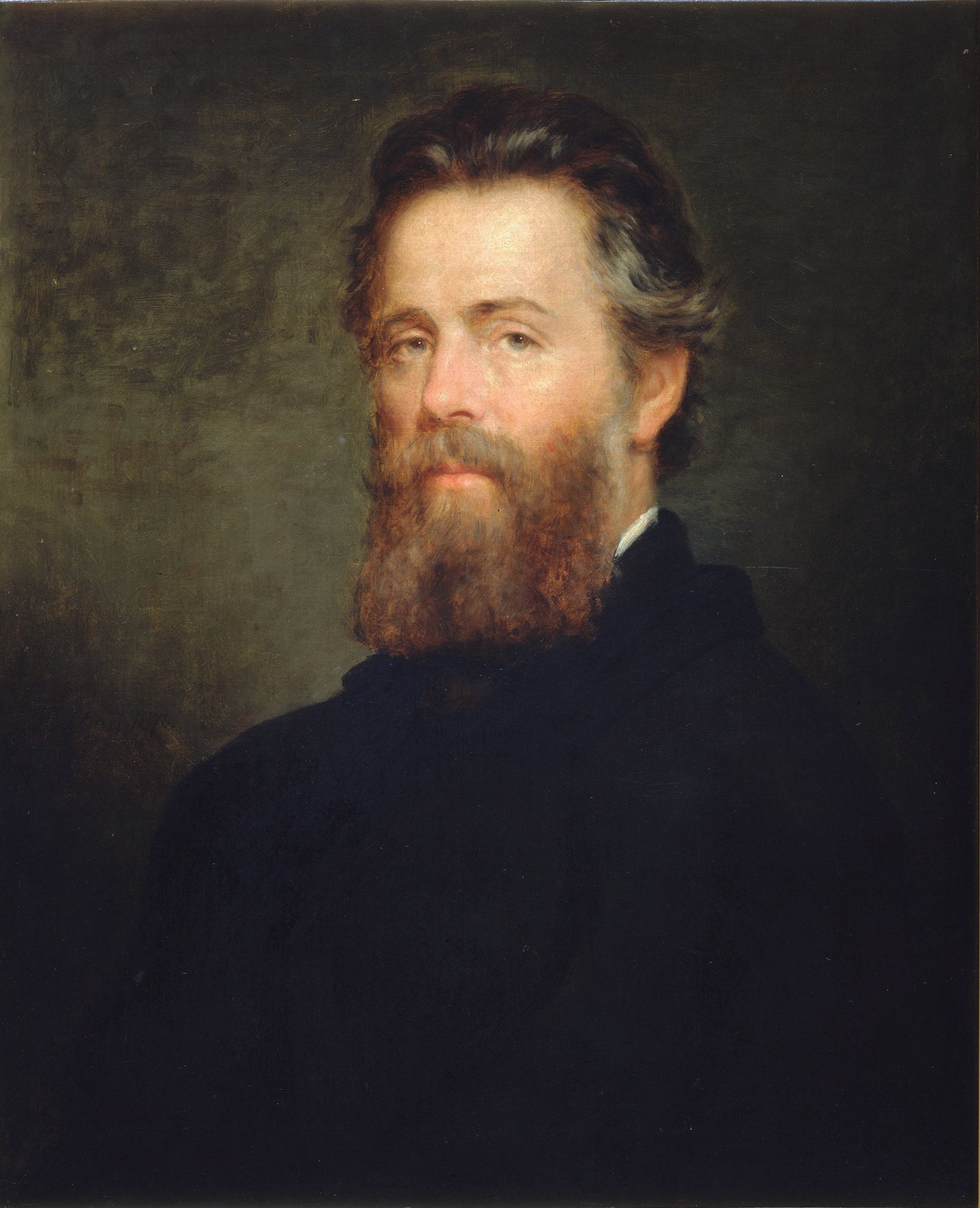
My favorite author, Herman Melville. I looked it up, and he didn’t have a cell phone, either!
Now, you may be thinking “well some of these points certainly have merit, but aren’t you being a little alarmist?” And to this I say, RING THE ALARM! For one, consider the following: throughout human history there have been all sorts alarmists; many have been wrong, some have been right. The point is, there’s a fundamental difference between a person saying “You better wear a tin-foil hat or the radio waves will enslave you to the alien overlords” and a person saying “You know, this Hitler guy seems like bad news.” The fundamental difference is that one of them is right. And here’s one promise I can make you. If you plucked a person from any civilization on earth before the 21st century and time-travelled them onto any street in America today, they would be alarmed at what they saw. I certainly am. About 30% of all the cars I see taking the turn by my house are driven by people looking. at. their. phones. That is alarming. And everywhere you go, people simply aren’t where they are. I tell you, a drinking game of “one-shot-for-every-person-looking-down-at-their-phone” is a one way ticket to Cirrhosis city.

This beautiful photograph was taken by… Anbi with a film camera!

A film photo from our hike through the woods of Wakayama, Japan…
Here’s the answer: be incredibly deliberate with how you use any piece of technology. In other words, use every digital tool only in ways that uplift what you value, and leave the rest behind. There’s lots of different ways to term this philosophy. One term you may have heard is Digital Minimalism. You can call it something else if you’d like, such as “Deliberate Technology” or whatnot, but for our purposes I’ll use the established term of Digital Minimalism. Cal Newport, who coined the phrase, wrote a phenomenal book on the subject, from which I’ve freely stolen in writing many of these paragraphs, and it’s called (who could have forseen this?) “Digital Minimalism.” I highly, highly recommend buying it or checking out a copy from your library, reading it, and following his outlined digital minimalist’s process of purging all non-essential technology from your life for one month, and then screening each piece of technology back into your life with the three questions of 1) Does this support something I value deeply? 2) If so, is it the best way to support this value? and 3) If it is, when and how will I use this technology?
If you, the beauty-seeking artist, do not do this, then the insidious companies that are pouring billions of dollars into your phone (that you carry with you everywhere you go), who have the irretrievably monstrous goal to sell as much of you, the product, to the real customers, the advertisers, as they possibly can, will almost certainly win. They will diminish who you are. Stand up against this! If it’s harder to live in the world, it’s because the world is wrong. And that’s okay. You don’t know how much of your life is gone until you compeltely step away from all addictive, attention-sucking technologies for a month. Creativity is one of the things you lose. Not to mention a depth of connection with the people you love that you didn’t even realize had been taken away from you, all so that shareholders in a company you hate can make even more grotesque, abstract, unspendable piles of money. If you’re interested in getting rid of your smartphone, please, please send me an email, and I will be more than happy to help you in this process. Your phone doesn’t care about you. But I do. Even if I don’t know you, I do. I want you to experience art, and your life, in the best, most beautiful way possible.
Alright, phew. Wow. Now that all my pesky anti-smart-phone, pro-joy-of-life proselytizing is out of the way, and I have most certainly establishd what the “good life that is conducive to the arising of beautiful ideas” means, I’ll get specific about the way I write songs. Back to fun prose!
Already, there is no chance of any of those other things happening, because I won’t hear the bird. What’s that you say? A contrivance? Perhaps… perhaps… but as I’m sure you guessed, this happened to me: I stopped using my smartphone to support a default media-consumption existence and the world blossomed before my eyes, in many, many more ways than this one example provided. And here’s what’s tricky about this: all the things you could do on a smartphone could be good positive, things, and doing all these positive things all the time still makes your life significantly worse. For instance, in my own case, I had no social media or addictive apps on my phone; I used it exclusively for calling, texting, listening to music, and looking things up, yet somehow, even though I was using it only for those positive things, getting rid of it increased the quality of my life in ways that are indescribable. How does that make sense? Like I mentioned in that second scenario, when I woke up I started listening to one of my favorite albums. Isn’t that a good thing? Ah, ladies and gentlemen, the rub has now arrived!
Listening to a good podcast, or to a good book, or to a good album, are all certainly good things. The problem is this: if we constantly (and for many people, it is literally every single free moment of the day) fill in the cracks and crevices of our lives by using smartphones for these small good things, then a much larger, more beautiful thing is being taken away from us: the calm, steady presence with oneself that fills every other facet of life with deliberation and beauty. It’s the steady, quiet hum of joy that we cast out of our lives in favor of always doing something, listening to something, checking something. This life which you are forced into living, if you have a smartphone, is so loud and stimulating that the quiet joys of life are utterly washed over. It’s difficult to even know what you’re missing when you’re in this state, and that’s why I believe it’s a greater tragedy than almost everyone realizes. And this point gets lost in the conversation because these pieces of technology genuinely do have things going for it.
Smart phones provide tremendous benefits and advantages, and the one advantage it can truly claim for itself is its sheer, overwhelming convenience. It’s effectively an all-in-one phone, messenger, music player, GPS, movie player, and flashlight: all amazing, incredible innovations. And, like I said, it’s the most convenient way to have all those advantages of modern technologies, because you get them all at once, all of the time, everywhere you go.
But here’s the secret: that very sheer convenience is the thing that kills the joy of all those individual services. Yeah, my CD walkman can’t text and call everyone on the planet instantaneously, but guess what: that’s one of the best parts about it! When I listen to music now I am utterly and completely present with the album in the disc cartridge. I can’t explain it very well, but it feels completely different from listening to music on a device that I was habitually and compulsively checking. And the limitations of its capabilities make me more aware and grateful for all that it can do. When I discovered my walkman could switch to different songs on the CD at the tap of a button my face lit up. I excitedly told my friend George, reading right next to me, about this amazing feature, and he laughed, saw that my joy was entirely genuine, and then laughed even harder in shared joy. What’s funny is that I never really felt grateful for my phone, and if any part of it stopped working it was just annoying. But the flashlight, the roman numeral analog alarm clock, the moleskin notebook: these things are loveable. There’s nothing sinister hiding in them. So why aren’t people switching away from phones to all these wonderful things? Would you, you reading this right now, consider switching out of the smart phone life?
If I had to guess, you already have misgivings about phones. It’s not a secret. We all hate them. But upon being addressed with my earlier question I think most people face a deep psychological conundrum that can be difficult to confront: If the change I have to make is radical, then I must have been radically wrong for years—whoa, that’s super, super painful. I don’t think this is a conscious linguistic thought; I think it’s a deep emotion that we all pretty much instantly feel. And I think this heavy feeling bubbling below, in combination with the smart phone’s deep societal integration, prevents many people from being psychologically capable of even considering getting rid of their smart phone. It’s never really a living option for them. Continuing this amateur armchair psychoanylsis, I’ll add this: I think one of the deepest, most fundamental natural psychologies is pain-avoidance. And admitting that we’re wrong hurts. It seems more likely that a person confronted with that question will vaguely feel something like I should use my phone less, because it’s not good for my mental health, and then—the tragic, common story—backslide every single time to where they were in the first place, all thanks to the powerful, subconscious, evil strategies employed by tech and social media companies to keep them addicted to something that poisons their life. But you know what? Here’s my argument. I’m gonna be frank. There is so much joy out there. In the face of the ecstasy of mental freedom, of steady peace with one’s self, of deepened relationships, of rejuvination of one’s hobbies, admitting you’ve been wrong about something is no big deal. This was certainly the case for me. Imagine the inside of my brain, if you will. It went something like this.
A little scenario for your further digestion: I wake up. I make my bed, go downstairs, and brew some coffee. I hear a bird singing outside, so I take my beverage out with me and walk around for a bit. The air feels nice so I decide to go to my local botanical gardens. At the gardens, a passing lady in a striped shirt smiles at me, and I smile back at her. We start chatting about the gardens, and it evolves into a joyous conversation. She tells me about her love for Norway and I tell her how I love Japan, and we connect on sharing the love of traveling to places with different cultural values. Life is like this. One small thing leads to another, and tiny pleasant experiences build up. Sometimes on the scale of a single day, sometimes on the scale of years. Sometimes this doesn’t happen; sometimes you just hear a chirp, think “that’s nice,” and go about your day. But a lot of times beautiful things bloom when you take the time to follow the threads life spreads before you. Now imagine this different scenario.
I wake up. I put in my airpods, and start listening to one of my favorite albums.
A photo I took on my first evening stroll with my non-smart digital camera!