how does it work?
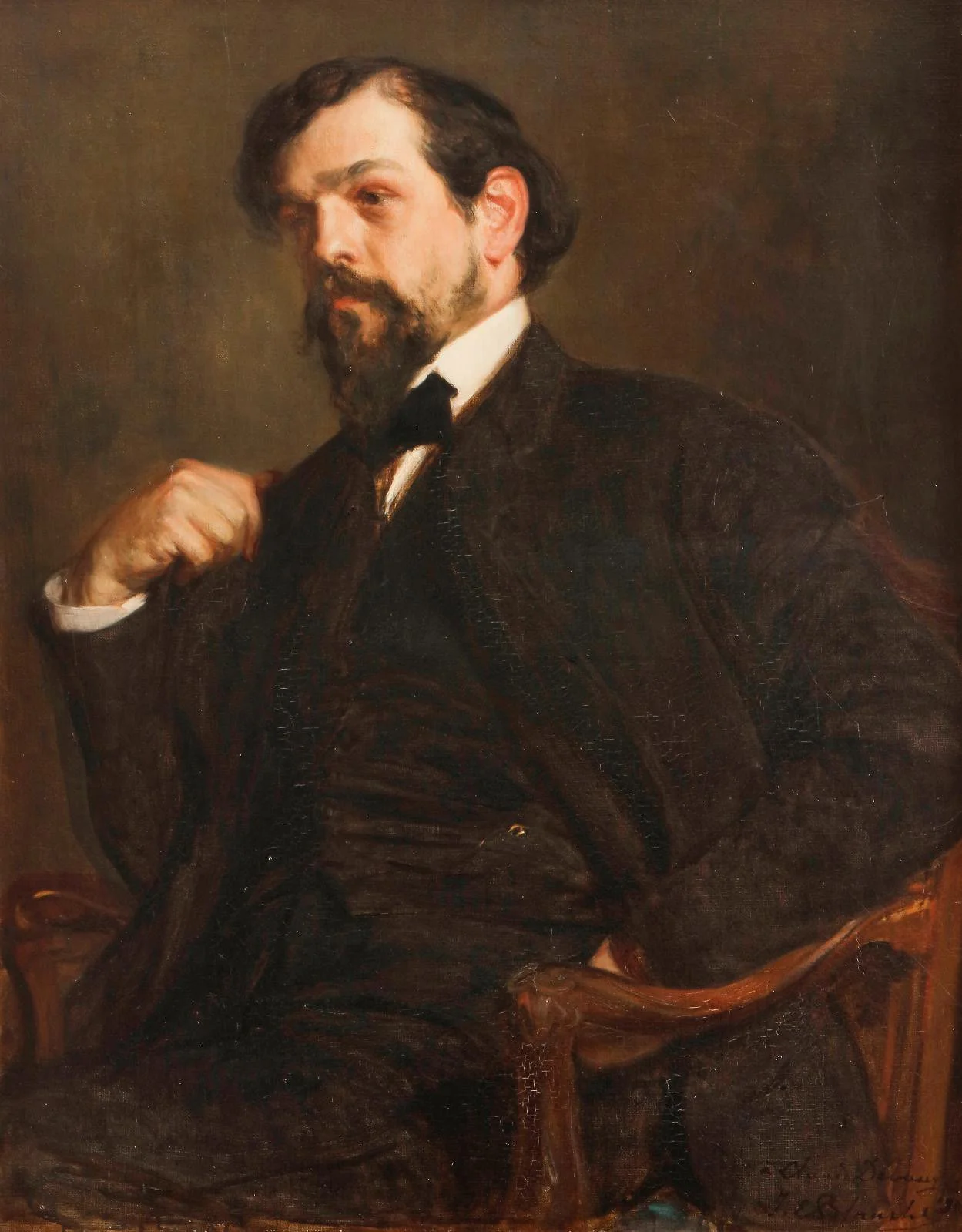
Claude DeBussy, a reliable “discoverer of beauty,” in my opinion
The answer boils down to this: instinct. You can’t use your intelligence, you can’t use instrumental virtuosity, and you certainly can’t use the current social trend of what’s popular. In my experience, the best I can do is A) live a good life that is conducive to the arising of beautiful ideas B) enter a non-judgemental, instinct guided flow state of raw creativity, before finally C) shifting into a blended editorial/creative phase where I continues to use the instinct over time to determine which ideas are truly beautiful. And then thousands of hours of banging my head against the wall since I’m not a recording or mixing engineer. But that’s art, baby!
And now, gentle reader, it’s time to get particular. I want to be as honest as possible in putting this down, this perlexing artistic process thing, that happens to be the most vulnerable and important process in my life—but it’s tricky to put into words. Some things will probably sound bizarre and out of nowhere, but I give you the musician’s guarantee that I’m not trying to be deliberately strange or mysterious; it’s just the nature of writing about a strange, mysterious thing.
First, part A: what do I mean by “live a good life that is conducive to the arising of beautiful ideas?” It comes down to living a slower, more deliberate life than the one that modernity (alas, the curséd modernity!) bestows upon us. This includes all of the common sense things: being deliberate about the art one experiences; spending time with kind and joyous people; creating time for large amounts of genuine mental solitude (so underrated!)—but, in my opinion there is one specific thing an artist (which I now rhetorically refer to as “you”) can do that is more important and more beneficial than anything else by orders of magnitude: get rid of your smart phone.
Whoa! Where did that come from? This guy, he’s stepping outside the bounds of the Overton Window! But it’s worth it, I tell you. And maybe it’s not violating the social code, since we all hate our phones, and we love saying so—but I’m going to get radical, and prescribe a real solution! That isn’t saying “I should use my phone less” and downloading an app and then backsliding every time! Which is uncomfortable! Because you’re probably have a smart phone, which makes your life worse! And so I say as I plunge the painful syringe, I’m sorry! But also, don’t worry, because I was doing those bad smart phone things too, for the last ten years of my life! And now everything is better. And so I say it again. Replace the smart phone with a dumbphone, music player, GPS, flashlight, etc. If you have never thought about this before, or have never been confronted with this idea at all, then it’ll certainly sound radical. And it is radical, like catching big waves on a sunny day radical, dude—or El Duderino, if you’re not into the whole brevity thing. If you feel a knee-jerk reaction that it’s atually impossible, I am here to tell you, it is not. It is tricky, but not actually difficult. And in the end, it’s invigiorating, yelp-of-joy-inducing, and life-affirming. And now, for the writing that is rather uncomfortable for us all. I pull at the collar of my shirt with gritted teeth as I write this.
Well, at this point I gotta say farewell to my prescriptive prose. Pretty much the only thing I feel confident in saying to the rhetorical “you” is “please, get rid of the smart phone!” since that’s the only thing that I feel really confident would be almost a universal net positive for the average reader. But everything else, who knows! We’re all different people with different personalities, and our own selves change so much day-to-day, hour to hour, that one can really never prescribe “the good life.” But for me and my “good life” in context of growing a garden for creativity, I’ve got one thing that is essential: long walks.
No music, no podcast, no nothin’ - naught but the trees, the wind, the sun, and the bees. Plus, you know, the thoughts. The neverending, ever-rolling flowing stream of consciousness—sometimes good, sometimes bad; sometimes 15-minute fantasy delusions, sometimes, alas, deep, inescapable darkness. But it’s all balm for the soul! When I consistently do this, every part of my life improves. Music is more satisfying, books are more interesting, I enjoy listening to people more. I’m much more likely to sit down and want to work on music. Boom, that’s thing one.
This is why music that is lyrically autobiographical tends to have pretty ardent but categorizable fanbases. A manufactured-pop-breakup-song (written by a team of 8 different songwriters 15 producers) and can still produce a powerful emotional response in teenage listener, because he or she may have just been through a breakup. It reaches them and gives them an emotional response because it’s relevant to their life. And one thing I want to be absolutely clear on, is that this is a wonderful thing. It’s one of the great things music can do, making you feel understood by listening to a song you relate to. Even if that art was manufactured, at least it’s art! At least it’s not a ballistic missile! Ballistic missiles do nothing but destroy things and kill people. Art makes you feel emotions. That’s very good thing, much better than a ballistic missile. And yes, though the capitalistic world of manufactured music dwarfs the world of humanistc lovingly-crafted music, and makes small artists financially incapable of supporting themselves, and slowly corrupts good instinctive songwriters into pop-star manufactures song-writers, and desires chiefly to make money first and art second, I’m still happy if it makes people feel good. But needless to say, those kinds of songs aren’t most people’s favorite songs, or infinite in the way songs that achieve that cosmic beauty are.
I don’t really think about this stuff when I’m actually in the process of making music - in the moment I’m jsut trying to find what feels right, what my deepest instinct is telling me - but essentially that’s the guiding philosphy.
Sometimes I listen to a song and think dammit, [insert artist] got to it first. This is how I feel about “Change” by Alex G. A simple, perfectly arranged chord progression that cannot be improved upon, and he took it for himself. The bastard. He’s my favorite artist for a reason though, and the fact that he consistently does this (the “Powerful Man,” guitar part, the coda melody of “Snot,” and pretty much all of “Gretel”) and consistently talks about “following a hunch” signals to me that he’s also a member of the use-your-instinct club.
Of course the rest of it comes down to craft. Craft comes down to good old practice. The hours. The combination of loving, dedicated hours focused on improvement, and of the hours of noodling and playing around. Both are necessary. I’ve played piano for thousands and thousands of hours and guitar for about half that. D
Every single great artist who has, in my experience, accomplished this kind of artistry has spoken of it in some way or another.
Bob Dylan in this interview:
Robert Frost on his poem “Stopping By Woods on a Snowy Evening,” which is a perfect example of this phenomenon in poetry.
Not that I really value interestingness as a quality of music very much, since it regularly gets in the way of making you feel something, which is, for me, the most wonderful, mysterious component of music, but it does have that weird quality of being unlike most music I’ve heard.
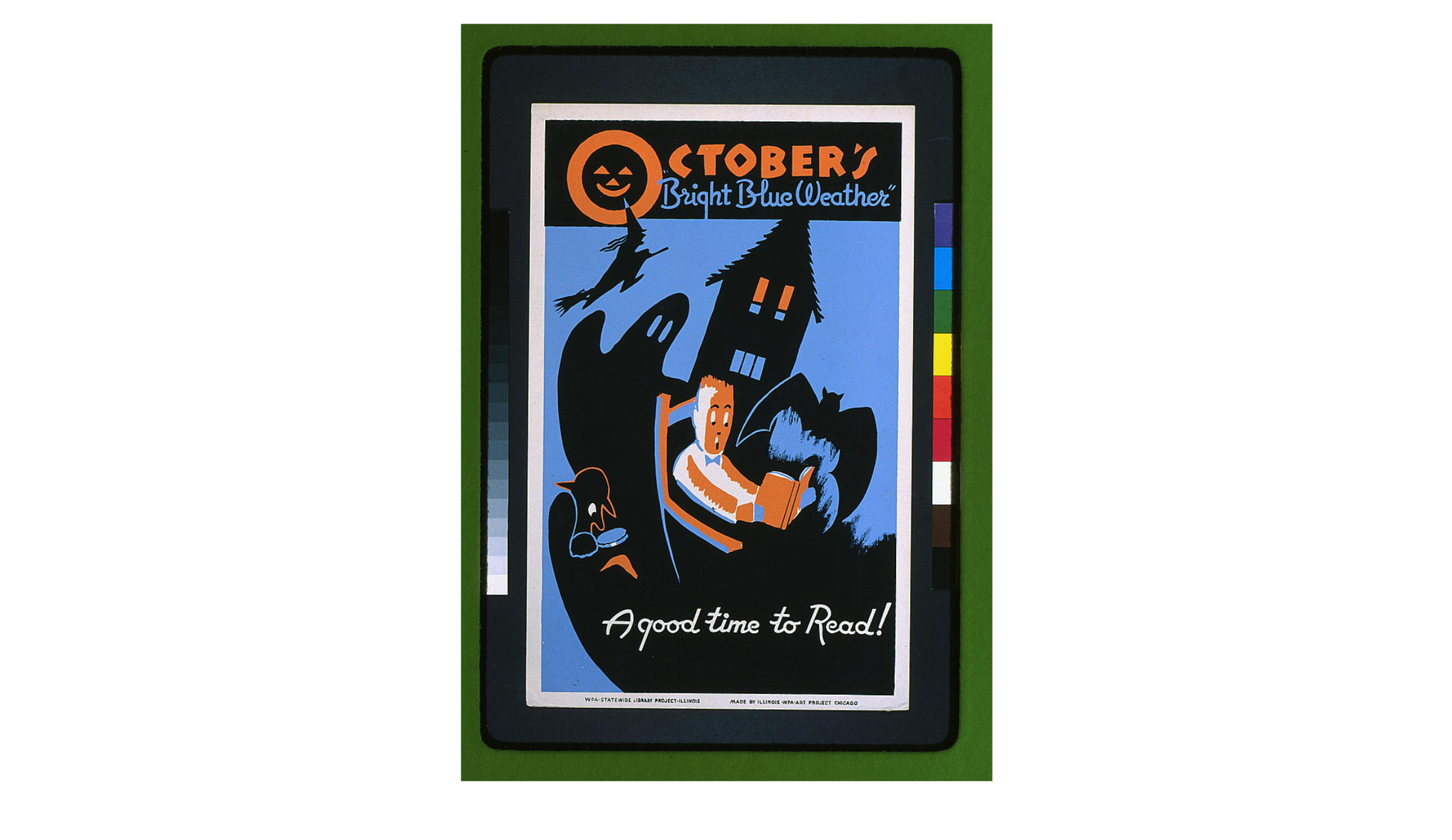
The joyous antidote to modern life… reading!
And then I would say, art, art, art. Good art. Or, at least, art I think will probably be good.
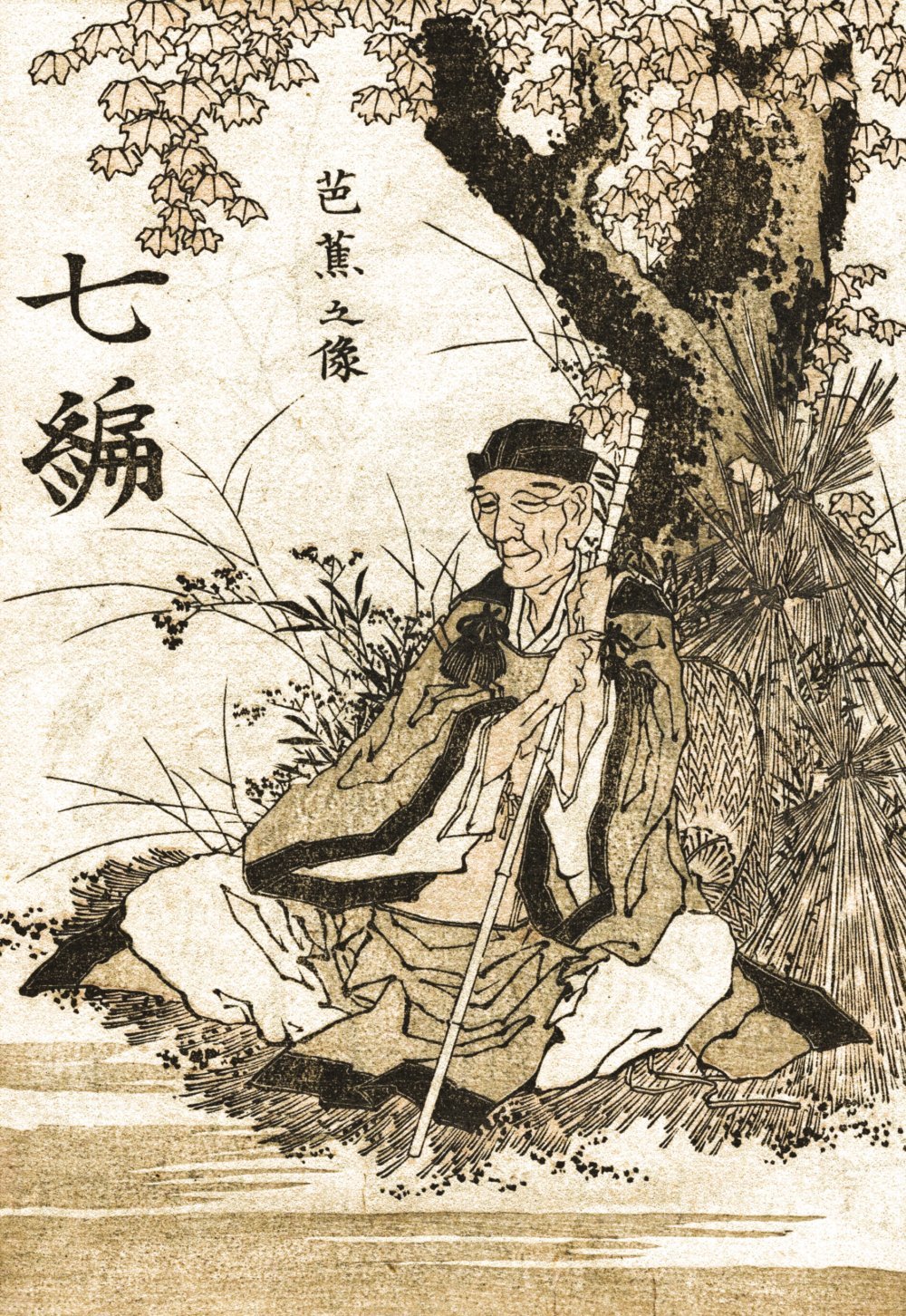
The Japanese poet Basho, who spent much of his life in nature!
The constant, ubiquitous use of smart phones is the cigarettes of our generation, except it’s worse. Big claim, I know, but I believe it. Cigarettes destroy physical health; smart phone addiction (and it is an addiction for almost everyone who has one; in 2025 the average American looks at their phone for 5 hours and 16 minutes per day) debilitates the mental inner life in such an invisible, insidious way as to damage the very mental system one needs to have awareness of the issue—to able to break out of the addiction, thereby making us incapable of realizing what’s happening. Mental problems are unique in this way. This is how this disease has developed into a tragedy of unebelievable scope, and why its true severity currently going unnoticed by billions of people, whose inner lives are right now being damaged in ways they don’t know, and who would be horrified if they were to learn the magnitude of their smart phone’s greedy, voracious consumption of their quality of life. Hey, what’s this now? A super secret link to a hidden part of the website in which I excoriate smart-phones and uplift the blossoming of solitude, friendship, nature, beauty that arises from removing smart-phones from your life? Feel free to read about it if you’re interested, since otherwise I’d spend all day on it here, and it’s time to get back to creativity! So besides not using smart-phone, what else constitutes the “good life that is conducive to the arising of beautiful ideas?”
Alright, phew. Wow. Now that all my pesky anti-smart-phone, pro-joy-of-life proselytizing is out of the way, and I have most certainly establishd what the “good life that is conducive to the arising of beautiful ideas” means, I’ll get specific about the way I write songs. Back to fun prose!
My mind is at peace, my phone is a landline, and my inner self smiles all the time. Time to write a song. Let’s do it.
The first thread of a songs pops up in life in lots of different ways. Sometimes I hear a line from a movie that sounds like a cool lyric, sometimes I’ll get a melody that plays in my head out of nowehere, and sometime’s I’ll be in the mood to straight up steal from another song. But sometimes, in very special rare moments of solitude, I’ll feel a surging lift in my heart, and a rush of happiness will fill my body with the feeling of infinite opportunity, and I simply have to create something. I don’t know what this is, but it is a gift from the universe. Whatever that first catalyst is, I just try to just follow where it leads. I definitely never approach the new tune with any specific idea of what I want. It’s all about what the song wants. Like I never sit down and say “I wanna write a song about X.” I’ll actually try not to really think about what I’m doing, in an effort trying to shift out of the intellect and into the instinctive gear.
How I Make art
Have you ever listened to a piece of music for the first time and thought it was so beautiful and perfect that it felt like you had heard it before? Like it couldn’t have been made by human hands, but was always there, floating around in the comsos? For me, it’s difficult to believe that “Claire de Lune” or “A Day in the Life” or “Just Like Heaven” were ever not part of this universe. It feels like an artist reached into that other dimension and brought it back to this world. There are many ways for music to be wonderful, but this kind, this “discovered beauty” kind, is my favorite kind. And buddy, you guessed it: this is the kind of music I want to make. But before I go launching into a confusing paean about how I go about trying to do that, we’ve got to answer the question: what explains the “discovered art” phenomenon?
Here’s my theory: I believe that beauty exists. I don’t believe it’s a subjective thing relative to each of our experiences; I think it’s an objective quality of things, like color or velocity. I think it can also, like velocity, change depending on the situation, while still being real. As far as I can tell, this is not the most widely-held opinion: most people (including me, at one point) feel that beauty and art are subjective, and that it’s simply a matter of taste. I see where they’re coming from, which is this: we all have different subjective experiences of the same objective reality. If we’re sitting on opposite sides of a table looking at a flower arrangement between us, and were asked the question “what does the flower arrangement look like?” we’d come up with similar but slightly different responses, because we literally have different perspectives. In the same way, I think we all approach art from different perspectives (like our cultural background, the music our parents played for us as kids, our neural wiring, etc.) which influence our subjective experience of the art, but doesn’t change that art’s objective qualities. I believe beauty is one of those objective qualities, like its color or loudness or length—though, I admit, one that’s more difficult to put one’s finger on. So how do I, denson camp the musician, go about trying to create/discover beauty when I’m making music?